


The Latest iPhone 18 News, Leaks, and Rumors
Apple’s next major iPhone cycle is shaping up to be one of the most significant in years. From a groundbreaking new chip to a radical split release schedule, the iPhone 18 lineup is already generating enormous buzz — and we’re still months away from the official announcement. Whether you’re a longtime Apple fan, a tech enthusiast, or simply deciding whether to upgrade, here’s everything we know so far about the iPhone 18.
1. iPhone 18 Release Date: What to Expect
2. A Split Lineup: Who Gets What and When
This is perhaps the biggest structural change to the iPhone lineup in recent memory. According to multiple credible sources — including Bloomberg’s Mark Gurman and reputable supply chain leaker Fixed Focus Digital — Apple will not release a standard base iPhone 18 in fall 2026.
Here’s the current expected schedule:
Fall 2026 (September)
- iPhone 18 Pro
- iPhone 18 Pro Max
- iPhone Fold (Apple’s first foldable)
- Possibly iPhone Air 2
Spring 2027 (February–March)
- iPhone 18 (base model)
- iPhone 18e
- Possibly iPhone Air 2
Adding weight to this theory, supply chain sources report that Apple has officially extended production of the base iPhone 17 beyond its usual window — a strong signal that the standard iPhone 18 won’t arrive until early 2027. For customers who typically buy the standard model, this means either paying a premium for a Pro in the fall or waiting until spring.
3. The A20 Pro Chip: Apple’s First 2nm Processor
At the heart of the iPhone 18 Pro and Pro Max will be the Apple A20 Pro, rumored to be the world’s first smartphone chip built on TSMC’s 2-nanometer fabrication process. This is a notable step forward from the 3nm process used in today’s A18 and A19 chips.
What does 2nm mean for you? In practical terms, smaller transistors mean more processing power packed into the same physical space, with improved energy efficiency. Current estimates suggest the A20 chip could be up to 15% faster and 30% more power-efficient than the A19 chips found in the iPhone 17 series.
The chip will also reportedly use TSMC’s Wafer-Level Multi-Chip Module (WMCM) packaging, which places the processor and memory on the same wafer rather than connecting them through separate components. This tight integration can improve data transfer speeds and reduce latency.
The base iPhone 18 models are also expected to get an A20 chip (non-Pro variant), though these will likely arrive with the spring 2027 models.
4. Design Changes and New Colors
The iPhone 18 Pro and Pro Max are not expected to bring a dramatic redesign. The overall form factor will reportedly remain similar to the iPhone 17 Pro models, including the iconic “plateau” camera housing at the rear. Display sizes are also expected to stay consistent at 6.3 inches for the Pro and 6.9 inches for the Pro Max.
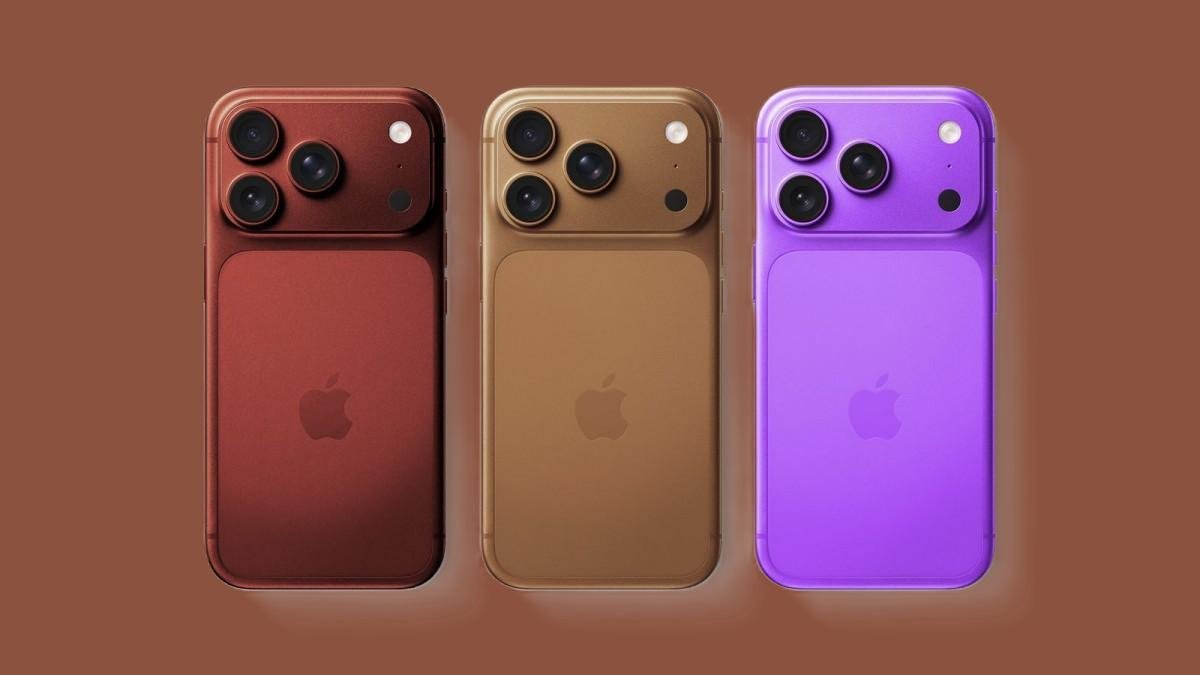
The more interesting story is the new color palette. According to Bloomberg’s Mark Gurman and a source close to Apple’s supply chain reported by Macworld, the iPhone 18 Pro lineup will introduce the following colors:
- Dark Cherry — a deep wine-like red, described as a bold signature color for the 2026 lineup
- Light Blue — a soft, elegant blue tone
- Dark Gray — a refined neutral finish
- Silver — a classic option returning to the lineup
The existing Cosmic Orange and Deep Blue from the iPhone 17 Pro are expected to be discontinued. Notably, the beloved Black finish reportedly will not return for the Pro models this cycle, according to a Chinese leaker — a decision that may disappoint many fans.
The rumored colors for the iPhone 18 Pro lineup 🔥 pic.twitter.com/WMJBpnJ4za
— Apple Hub (@theapplehub) May 13, 2026
5. Camera Upgrades: Variable Aperture and More
The camera system on the iPhone 18 Pro Max could be the most exciting upgrade in the entire lineup. Leaks point to a variable aperture main camera — a first for any iPhone. This feature, common in professional DSLR and mirrorless cameras, allows the lens to physically open and close to control how much light enters the sensor.
In practical terms, this means:
- Better low-light photography without relying solely on software processing
- Real control over depth of field, allowing you to blur backgrounds more naturally or keep a wider scene in sharp focus
- More creative flexibility that was previously only possible with dedicated camera equipment
The Pro Max is expected to be the primary recipient of the variable aperture system, while the standard iPhone 18 Pro is rumored to receive enhanced telephoto lenses with a faster aperture. Both Pro models are expected to retain the 48MP triple rear camera system from the iPhone 17 Pro.
On the front camera side, most iPhone 18 models (excluding the budget iPhone 18e) are expected to receive an upgraded 24-megapixel front-facing camera, up from 18 megapixels. This would be a significant jump for selfies, FaceTime calls, and Portrait mode shots.
There’s also buzz around Apple potentially switching from Sony to Samsung for image sensors in the 2026 lineup — a supply chain development that would mark a major shift, as Sony has been Apple’s sole sensor supplier for years.
6. Display: Smaller Dynamic Island and Under-Display Face ID
One of the most anticipated visual changes to the iPhone 18 Pro involves the Dynamic Island. Multiple reliable sources, including display analyst Ross Young and OTI Lumionics CEO Michael Helander, have corroborated that the iPhone 18 Pro models will feature under-display Face ID technology.
By moving the Face ID flood illuminator beneath the screen, Apple can reduce the size of the pill-shaped cutout, resulting in a noticeably smaller Dynamic Island. This would give the display a cleaner, more immersive appearance.
Display specs are expected to include:
- LTPO+ ProMotion OLED panels with variable 1–120Hz refresh rates
- Significantly brighter peak brightness compared to iPhone 17 Pro
- Under-display Face ID on Pro models
Whether the Dynamic Island will be entirely eliminated or simply shrunk remains unclear. Given Apple’s creative software uses of the Dynamic Island since its 2022 debut, it seems more likely that a smaller version will remain.
7. Battery and Connectivity
Battery improvements are expected across the iPhone 18 lineup, with the Pro Max reportedly carrying a 5,100–5,200 mAh battery — a modest but welcome increase over the iPhone 17 Pro Max’s 5,088 mAh cell. The standard Pro is expected to offer a battery in the range of 4,500 mAh.
On the connectivity front, 2026 brings a major milestone: Apple’s in-house C2 modem chip, which replaces Qualcomm modems entirely. The C2 is expected to bring:
- mmWave 5G support, expanding Apple’s 5G capabilities beyond what the C1 offered
- Improved performance closer to Qualcomm’s flagship modems
- A privacy-focused “Limit Precise Location” setting that reduces the location data available to mobile networks
The iPhone 18 lineup will also support full satellite internet connectivity, building on the emergency SOS satellite features introduced in earlier iPhone generations.
8. iPhone 18 Pro vs. Pro Max: Key Differences
If you’re deciding between the Pro and Pro Max, here are the key rumored distinctions:
| Feature | iPhone 18 Pro | iPhone 18 Pro Max |
|---|---|---|
| Display Size | 6.3 inches | 6.9 inches |
| Chip | A20 Pro (2nm) | A20 Pro (2nm) |
| RAM | 12GB | 12GB |
| Main Camera | Enhanced telephoto, faster aperture | Variable aperture main camera |
| Battery | ~4,500 mAh | ~5,100–5,200 mAh |
| Under-Display Face ID | Yes | Yes |
| Dynamic Island | Smaller | Smaller |
Both models are expected to share the same processor, RAM, and under-display Face ID feature. The main differentiators remain screen size, battery capacity, and the camera system.
9. The Base iPhone 18 and iPhone 18e
While the spotlight is firmly on the Pro models for fall 2026, the base iPhone 18 and iPhone 18e are still coming — just later. When they do arrive in spring 2027, they are expected to:
- Maintain the same 6.3-inch display size as the iPhone 17 (no design changes expected)
- Be powered by a non-Pro A20 chip
- Feature an upgraded 24MP front-facing camera (iPhone 18e may be excluded)
- Come with 12GB of RAM across all models — a first for the standard tier
The iPhone 18e will reportedly retain a smaller 6.1-inch display, serving as the most affordable option in the lineup.
10. iPhone Fold: Apple’s First Foldable
Perhaps the most anticipated Apple product in years, the iPhone Fold (also referred to as the foldable iPhone) is expected to debut alongside the iPhone 18 Pro lineup in fall 2026. This will mark Apple’s entry into the foldable smartphone market, years after rivals like Samsung have established their own folding devices.
Rumored details about the iPhone Fold include:
- A book-style form factor similar to Samsung’s Galaxy Z Fold series
- A price point potentially upwards of $2,000, making it Apple’s most expensive iPhone ever
- The A20 Pro chip, shared with the Pro models
- Premium materials potentially including ceramic composites and advanced glass
Given Apple’s track record of refining existing categories rather than rushing to be first, the iPhone Fold is expected to be a highly polished debut.
11. Pricing Expectations
Apple has not confirmed any pricing, and it’s still too early for reliable leaks on exact price points. Based on current trends:
- iPhone 18 Pro: Expected to start around $999–$1,099
- iPhone 18 Pro Max: Expected to start around $1,199
- iPhone Fold: Rumored to start at $1,999 or higher
- iPhone 18 (base): Expected to start around $799–$899 (spring 2027)
- iPhone 18e: Expected to start around $599
Whether Apple will raise prices for the Pro models remains to be seen. The iPhone 17 Pro saw a $100 price increase in 2025, while the Pro Max held steady.
