


The Vivo X300 Ultra currently sits at the top of many camera phone rankings for 2026, widely regarded as one of the strongest camera-focused flagships released this year. Unlike Xiaomi, which appears to have shelved plans for an 18 Ultra successor, Vivo does seem to be moving forward with a follow-up for 2027, with a reliable leaker now offering an early look at what could be coming to the camera system.
Rising Costs Are Putting Ultra Flagships at Risk
Before diving into the specific camera details, it’s worth noting the broader context here. Rising component costs have been squeezing manufacturers across the smartphone industry, leading not just to higher retail prices but also shrinking profit margins on high-end devices. In some cases, ultra-premium camera flagships have reportedly become barely profitable to produce at all.
The Xiaomi 18 Ultra appears to be an early casualty of this trend, with development reportedly halted entirely. According to a recent leak, other Ultra-tier camera flagships planned for 2027 could face similar risk. That said, at least for now, both the Oppo Find X10 Ultra and the Vivo X500 Ultra appear to be moving forward as planned, even as the broader category faces pressure.
Vivo X500 Ultra Camera Development Still Being Finalized
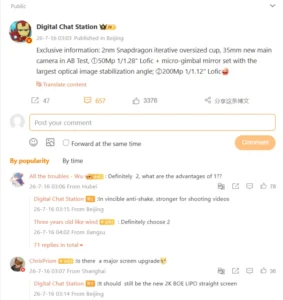
According to Digital Chat Station, a leaker with a generally strong track record for Vivo-related leaks, the final camera specifications for the Vivo X500 Ultra haven’t been locked in yet. Instead, Vivo appears to still be evaluating multiple options for both its 35mm main camera and 85mm telephoto lens, with a final decision expected closer to launch.
35mm Main Camera: Two Possible Directions
The current Vivo X300 Ultra’s 35mm main camera is built around a 1/1.12-inch, 200-megapixel Sony LYT-901 sensor. For the X500 Ultra’s successor, two distinct development paths are reportedly being considered.
The first option involves switching to a smaller 50-megapixel, 1/1.28-inch sensor featuring LOFIC technology, paired with a significantly upgraded micro-gimbal stabilization unit. While this would represent a step down in both sensor size and resolution compared to the current model, the tradeoff would be notably improved video stabilization, an area where micro-gimbal systems tend to offer substantial real-world benefits for handheld video recording.
The second option would keep the current sensor size and resolution intact, while still incorporating LOFIC technology to significantly boost dynamic range without sacrificing the larger sensor’s other advantages. This same LOFIC technology is also expected to make its debut in the upcoming Vivo X500 Pro later this year. Based on early reactions to the leaker’s original Weibo post, community sentiment appears to be leaning toward this second option, likely due to the appeal of gaining dynamic range improvements without giving up sensor size or resolution.
It remains unclear which direction Vivo will ultimately choose, and it’s possible the final decision could still shift as development continues.
85mm Telephoto: Three Options on the Table
While the leaker hasn’t yet shared details regarding the ultra-wide-angle camera, three potential paths have reportedly been outlined for the 85mm telephoto lens, which currently uses a 1/1.4-inch, 200-megapixel Samsung ISOCELL HP0 sensor on the X300 Ultra.
The first option would be a more conservative evolution, retaining the same sensor size as the current model. The second option reportedly involves stepping up to a larger 1/1.3-inch, 200-megapixel sensor. The third and most ambitious option would see Vivo adopt a 1/1.12-inch, 200-megapixel sensor, matching the sensor size used in the main 35mm camera itself, a genuinely bold move if Vivo chooses to pursue it.
For context, Oppo has already implemented a 1/1.28-inch telephoto sensor in its Find X9 Ultra, making a similarly sized upgrade a fairly natural next step for Vivo’s own telephoto camera. Whether Vivo is willing to go further and use two matching 1/1.12-inch sensors across both the main and telephoto cameras remains an open question, since that would represent a significant jump in both cost and internal component space requirements.
What This Means for Camera Phone Enthusiasts
If Vivo does move forward with the more ambitious camera options being considered, particularly matching sensor sizes across the main and telephoto lenses, the X500 Ultra could push camera phone hardware even further than its already well-regarded predecessor. Given the current pressure facing Ultra-tier flagships industry-wide, Vivo’s continued investment in this level of camera hardware stands out as a notable commitment to the category, at least for now.
As development continues, more concrete details are expected to emerge closer to the phone’s eventual 2027 launch.
Don’t miss a thing! Join our Telegram community for instant updates
For more daily updates, please visit our News Section.
